Weaving individual fibers into a basket to carry
How people live here
Kiondo is a handwoven basket bag familiar to some communities in Kenya; fibers such as sisal are processed, twisted into cord and woven to form a sturdy body, and straps may be added. The national museum records examples of Kikuyu women making and using baskets to carry food. Contemporary workshops continue to vary size, color bands and materials, and a single museum object cannot represent all basket weavers.
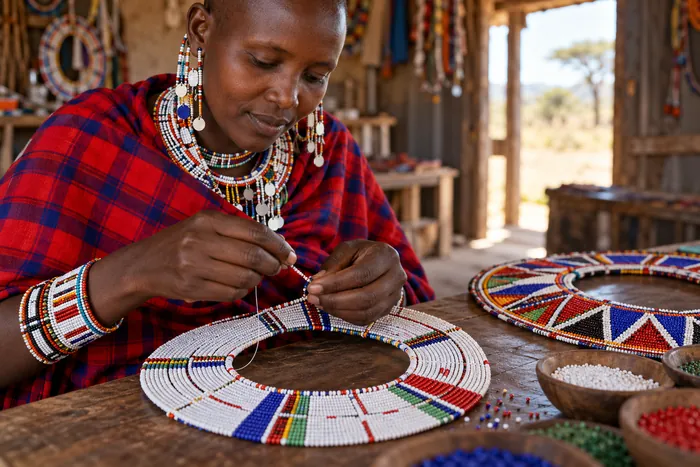
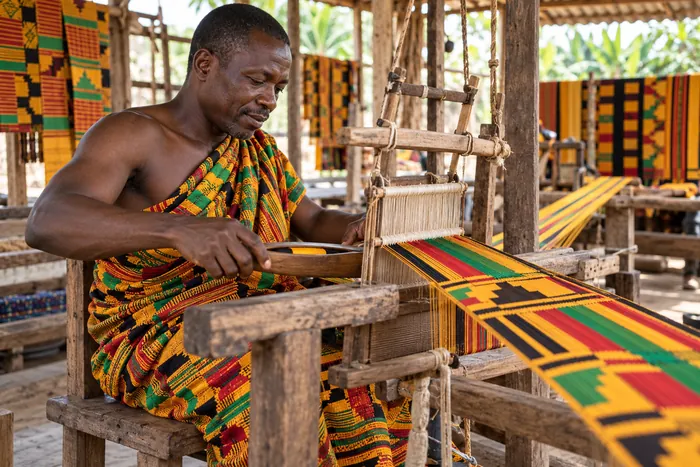
Start from the base of the basket: the fibers are organized coil by coil or row by row, gradually forming side walls that can hold things. Color bands are added as weaving proceeds, and the handle and finishing edge determine how it is used in daily life. A Chiondo in the collection of the National Museums of Kenya records the sisal material, the making community, and its use for carrying food; today's markets also show different color schemes and designs. A basket is not merely a souvenir posed for the camera; it is also tied to makers' income, skills, and customer demand. Asking how long a basket took to make reveals the craft better than comparing prices alone.
Take a closer look
Dense fibers at the basket base
Color bands changing along the basket's body
Carrying straps attached at the finished rim
Look with respect
Ask whether makers are willing to demonstrate and be photographed; do not pull unfinished fibers. When buying, confirm materials and provenance, and respect the labor of handmaking.
These accounts describe particular places and communities. Consult current local information for dates, participation rules and contemporary forms.