Palm-leaf fibers become richly textured geometric designs
How people live here
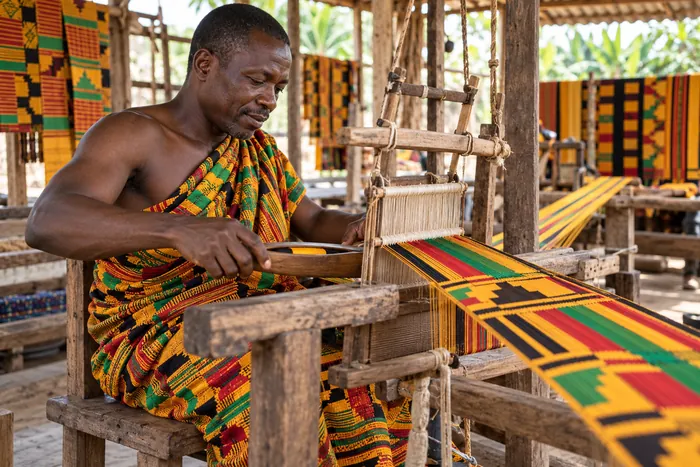
Kuba textiles use raffia palm fibers to create rich designs through weaving, embroidery, appliqué and pile techniques. Communities in the Kasai River region of the Democratic Republic of the Congo have distinct skills and aesthetics. The cloth has been associated with formal clothing, household wealth and ceremonial exchange. Historical collections reveal the depth of the craft but should not be treated as the everyday clothing of all contemporary residents.
When looking at a Kuba textile, first distinguish the plain-woven ground from the raised pile, then follow a geometric line as it changes direction. Repetition is not mechanical copying: local variations give the whole composition its rhythm. Shoowa works from the Kasai River region documented by the Metropolitan Museum of Art use raffia fibers and reflect the labor of preparing materials and applying different decorations. A work's role in its original community must be understood through its particular date and provenance, rather than reduced to a label such as abstract art. Relationships between contemporary making and historical ceremonies also change; makers' explanations should remain central.
Take a closer look
The contrast between plain-weave ground cloth and pile embroidery
Geometric lines that keep turning
The natural texture of raffia fibers
Look with respect
Do not touch museum or ceremonial textiles without permission. When buying, ask about provenance, date and maker; do not casually treat valuable historical textiles as ordinary decoration.
These accounts describe particular places and communities. Consult current local information for dates, participation rules and contemporary forms.