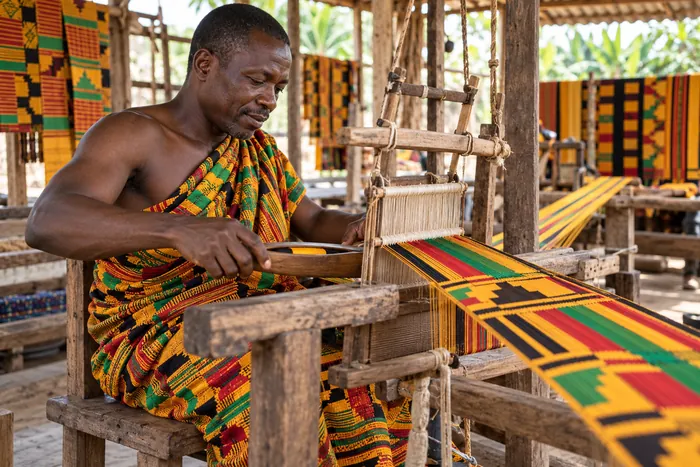
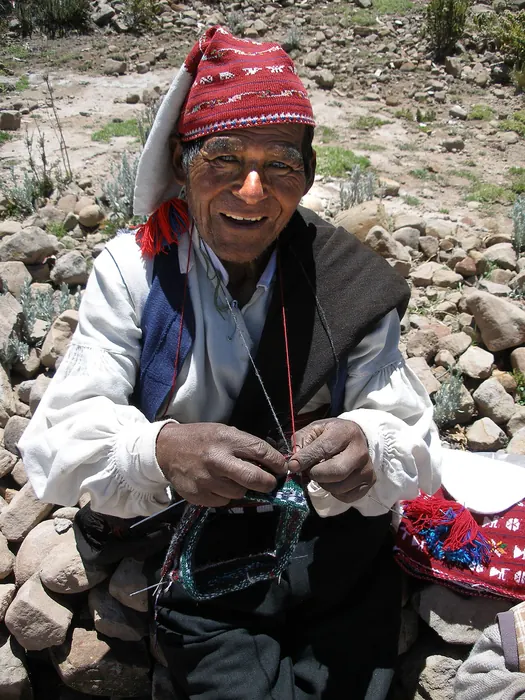
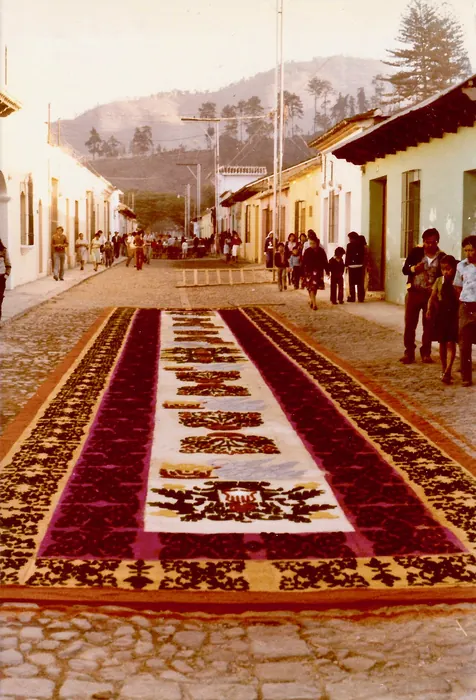
The pattern on a silk scarf begins with a single wooden block
How people live here
The kəlağayı silk scarf is made from a light silk fabric, patterned through dyeing and wooden-block decoration. Workshops in Sheki and Basqal preserve collaboration across different stages, and the scarf's colors, ways of tying and gifting are also tied to the wearer's occasions and choices.
A square of silk is dyed and dried, then its edges are printed step by step with wooden blocks. What looks like a light scarf requires weavers, dyers and decorators to build up a feel for the work, keeping colors stable and repeated patterns aligned. Its uses and symbolism vary with occasion, generation and personal choice, and the wearer's identity cannot be judged by color alone. A photograph can connect the silk laid flat in the workshop with the folds it takes on when worn: the same set of patterns only begins to meet people's movements once it leaves the table.
Take a closer look
Light passing through a square of fine silk
Continuous block-printed patterns along the edge
Dyed silk scarves hanging to dry
Look with respect
Do not pull wet silk or touch dyes; ask before trying on items or photographing, and do not infer anyone's identity from clothing.
These accounts describe particular places and communities. Consult current local information for dates, participation rules and contemporary forms.