Two voice parts heard in a single breath
How people live here
A throat singer sustains a low drone while bringing out a high overtone melody. In the teaching traditions of western Mongolia, wind, water and mountain life can all serve as references for the sound; today different styles can also be heard in classrooms and on stage.
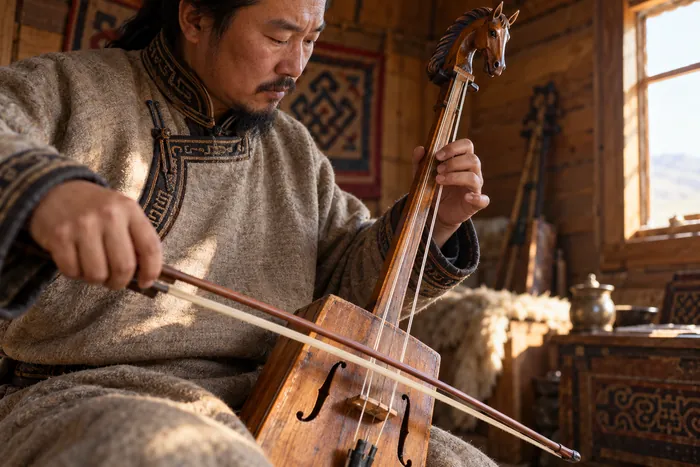
One person opens their mouth, yet the listener seems to hear two lines extending at once: a lower tone holds steady beneath, while the melody above slowly changes. Khoomei requires long training, and subtle adjustments of the mouth and breath matter more than exaggerated movements. Multiple overtone-singing traditions exist in the Altai region and beyond; Mongolian khoomei is just one branch with its own transmission network. A photograph cannot directly preserve sound, but it can draw attention to the singer's breathing, focused face and the students beside them earnestly imitating.
Take a closer look
A singer's focused mouth movements
A companion listening quietly
Face-to-face learning between teacher and pupil
Look with respect
Keep quiet during singing and obtain permission before recording. Do not ask singers for improvised challenges that could strain their voices.
These accounts describe particular places and communities. Consult current local information for dates, participation rules and contemporary forms.