Turning the longest night into time together
How people live here
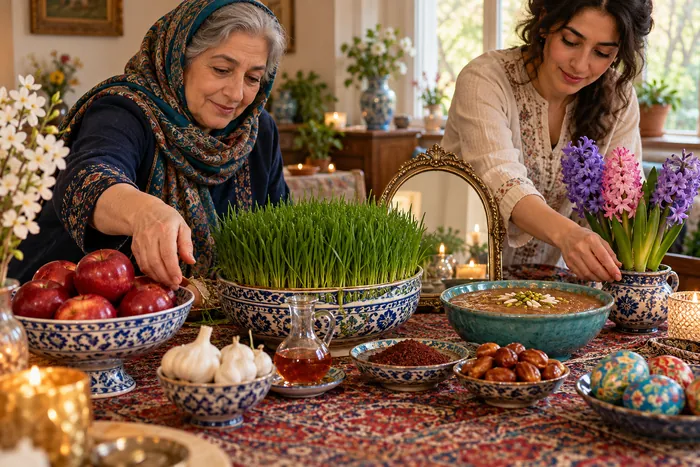
In many Iranian households, Yalda welcomes seasonal change through red fruit, nuts, light and gathering. Relatives and friends visit elders to read poetry, tell stories or play games, making the long night shared time. Related traditions exist in Afghanistan and elsewhere, with different poetry, foods and forms across languages, places and families.
Cut pomegranates and watermelon bring vivid red to a cold-season evening, while nuts and sweets can be shared slowly over conversation. A book of poetry opens: someone reads, others listen to elders recall the past; some families prefer games or music. UNESCO's account connects the night with the warmth of life, hospitality and exchange between generations, rather than a fixed menu. Its date follows the rhythm of late autumn and early winter and should not simply be assigned the same Gregorian-calendar night every year. Most worth noticing is how food keeps people of different ages around the same table.
Take a closer look
A split-open pomegranate and red fruits
A book of poetry beside the table
Family members sitting around an elder
Look with respect
After accepting an invitation, ask about household and dietary arrangements. Do not invent private meanings for another person's poetry reading. Ask before photographing or recording in a home.
These accounts describe particular places and communities. Consult current local information for dates, participation rules and contemporary forms.