Drums, voices and dance steps take turns speaking in a courtyard
How people live here
Cuban rumba connects percussion, call-and-response singing and dance, and developed within community life in places such as Havana and Matanzas. It has different forms and rhythms and blends multiple cultural experiences; the international ballroom dance of the same name cannot substitute for the community practice here.
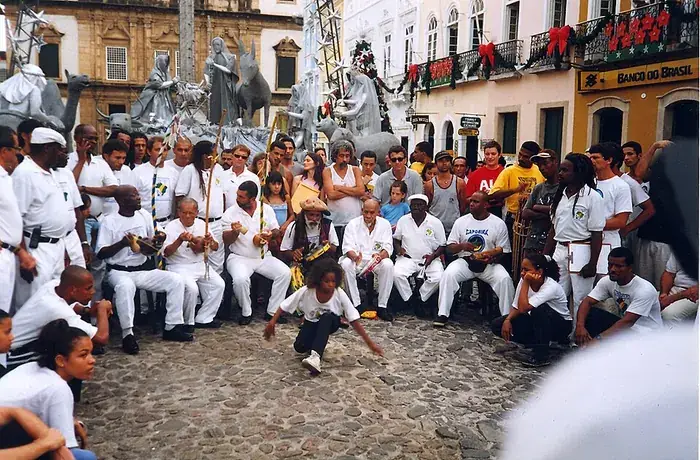
One singer begins, the people beside respond, the drummer keeps shifting the accents, and the dancers answer with their feet and bodies. Some stand at the edge of the circle watching, others prepare to enter next; there is no simple boundary between performance and gathering together. Cuban rumba has gone through creation by Afro-descendant communities, urban life and modern dissemination, and is not an anonymous, unchanging set of movements. When looking at a photograph, observe the lines of sight among drummer, singer and dancer at the same time, and understand how the rhythm is taken up in turn; at the centre of the music are precisely these constant responses.
Take a closer look
A drummer's alternating hands
A lead singer and responding crowd
Glances exchanged by dancers and musicians
Look with respect
Do not enter the dance circle or touch dancers without invitation; obtain permission before recording, photographing, or using works, and respect local performance and social boundaries.
These accounts describe particular places and communities. Consult current local information for dates, participation rules and contemporary forms.